Load Bearing Wall Removal - Structural Engineering Services
How to Install an RSJ (Steel Beam) for House Extensions: A Step-by-Step Guide
Thinking about creating more space in your home? If you're planning a load-bearing wall removal or extension, you’ll likely need an RSJ (Rolled Steel Joist) to safely support the structure.
However, installing an RSJ is not just about placing a steel beam into position. It requires careful structural design, accurate calculations, and full compliance with UK Building Regulations to ensure everything is carried out safely and correctly.
At SAB Structural Engineering, we regularly support homeowners and builders with structural calculations, drawings, and site advice for RSJ installations, helping projects move forward smoothly and with confidence.
This guide explains the RSJ installation process from initial design through to final checks, so you know what to expect, how to prepare, and when to involve the right professionals.
Understanding RSJs and Their Role in Extensions
An RSJ (Rolled Steel Joist) is a structural steel beam designed to carry heavy loads, commonly used in home extensions, loft conversions, and when removing load-bearing walls. When a structural wall is taken out, the RSJ takes over the role of supporting the loads above, transferring them safely down into the foundations, typically via pad foundations or supporting walls.
It’s a strong, reliable solution that makes open-plan living possible while keeping the structure safe. With the right design and installation, RSJs provide both strength and a clean, practical finish — which is why they are widely used in residential projects supported by structural engineers such as SAB Structural Engineering.
"Sizing a steel beam is not a matter of approximation. When a wall is removed, the loads it was carrying, from floors, roofs or walls above, must be safely redirected. That requires proper structural calculations, an understanding of how loads travel through a building, and compliance with Building Regulations and current design codes." — James Atkinson, Homebuilding
Step 1: Design and Structural Calculations
Before installation, a qualified structural engineer will assess the project and design the appropriate RSJ, determining the correct size, span, and load capacity for your specific layout. Once Building Control approval is in place, the beam is fabricated and prepared for installation — a stage that may appear quick on site but relies heavily on proper planning and coordination.
In most UK projects, RSJ installation itself typically takes one to two days once everything is ready. However, the overall process — including design, approvals, and fabrication — can take several weeks, particularly during busy periods. Different RSJ styles handle different structural needs, so picking the right one really matters. The engineer chooses the beam’s shape, measurements, and steel grade to fit the project, where their accuracy truly helps.
Step 2: Site Preparation and Temporary Supports
Once the design is approved, the next stage is preparing the site. The key priority is keeping the structure fully supported before any load-bearing elements are removed. Builders typically use Acrow props with strongboys, and sometimes timber supports, to temporarily hold up floors and ceilings — simple but highly reliable methods.
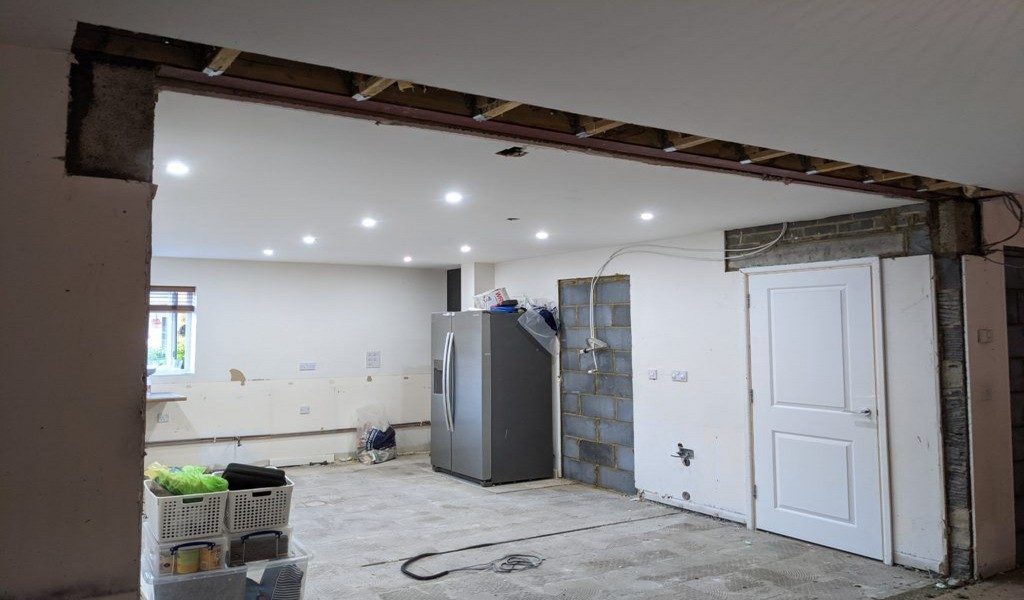
Correct placement of these supports is critical, as even minor movement can affect the stability of the structure. Once everything is secure, the opening is set out and the masonry is carefully removed to create space for the RSJ beam. While it may appear straightforward, this stage often requires precision and care.
The work can be noisy and disruptive, with dust and debris throughout. Appropriate protective equipment such as gloves, goggles, and hard hats should always be used, and steel beams should never be lifted manually without proper assistance or suitable lifting equipment.
Step 3: Beam Fabrication and Delivery
This is where the RSJ moves from design into reality. The steel fabricator works from the engineer’s drawings, ensuring all measurements, cuts, and connections are precise, with no room for error. Bolt holes, end plates, or welded connections are prepared exactly as specified to suit the installation on site.
If the beam is to be used in areas exposed to moisture, such as basements, garages, or certain loft spaces, a protective finish like galvanising or specialist paint is typically applied. This helps prevent corrosion and ensures the long-term durability of the steel.
In terms of cost, steel beams in the UK generally range from £100 to £300 per metre, with installation labour typically between £500 and £2,000. For more complex installations, the total cost of a single RSJ can reach around £5,000, depending on the size and structural requirements.
Step 4: Installation and Alignment
Once the site is prepared and the beam is delivered, installation can begin. The RSJ is carefully lifted into position, typically using a hoist or suitable lifting equipment, and placed between the prepared bearings above the opening. Each end of the beam is supported on padstones, which help distribute the load safely into the surrounding masonry.
Achieving the correct level and alignment is critical, and the beam should be installed in accordance with the structural drawings. Once positioned, it is secured as required, with connections such as bolts or welds, and any joists or adjacent elements are fixed using appropriate brackets or straps. A properly installed beam will provide a solid and stable structural support.
Fire protection is also an important requirement. In line with UK Building Regulations, exposed structural steel must be protected, typically through intumescent paint or by encasing it in plasterboard, to maintain its structural integrity in the event of a fire.
Step 5: Inspection and Finishing Touches
Once the beam is installed, a Building Control officer will typically carry out an inspection to ensure the work complies with regulations. This includes checking the beam’s alignment, bearing on padstones, fire protection, and overall installation. This stage confirms that the structural work has been completed safely and correctly.
Following approval, the area can be finished to suit your design. This may include plasterboarding and painting for a clean finish, adding trims for a neat appearance, or leaving the steel exposed for an industrial look. Any exposed steel should be properly sealed or protected to prevent corrosion over time.
The Bottom Line: Safe, Strong, and Compliant
Installing an RSJ is a key stage in many home extensions and structural alterations. It’s not just about supporting an opening, but ensuring the overall stability and safety of the property while meeting Building Regulations.
From initial design through to final approval, each step plays an important role in the success of the project. Engaging a qualified structural engineer ensures accurate calculations and compliance, while a competent builder helps deliver the design correctly on site.
With careful planning, clear drawings, and the right team in place, an RSJ installation can be completed smoothly — providing a strong, safe, and long-lasting solution for your home. For professional support, contact us to ensure your project is designed and delivered with confidence.